What does water loss cost a commercial pool owner?
Commercial pool water loss is not just a maintenance nuisance. For facility managers and property owners, a pool that steadily loses water drives up operating costs through higher water bills, extra chemical use, and unnecessary wear on the circulation system. Understanding how much water is actually leaving and why is the first step toward controlling those expenses.
Why water loss matters on a commercial scale
A residential pool might lose an inch or two per week from evaporation and normal use, and the owner tops it off without much thought. A commercial pool - think of a public pool at a community center, a hotel, an apartment complex, or a fitness club - holds many times more water. Even a small daily drop in water level translates to hundreds or thousands of gallons a month going through the makeup line. That water has to be paid for, treated, and heated.
Water meters at commercial properties register every gallon that enters the pool. A slow leak that might go unnoticed at home can show up as a significant cost on the utility bill. Over a season, the difference between a tight pool and one with a small leak can run into thousands of dollars. And it is not just the water itself. The chemicals used to balance the replacement water - chlorine, pH adjusters, alkalinity buffers - are an ongoing expense that rises with the volume of fresh water added.
How water loss shows up in operating costs
The costs split into a few clear categories:
- Water supply and sewer charges. Every gallon that is added to replace lost water costs money. In many municipalities, sewer charges are based on water consumption, so a pool leak can raise sewer fees even though the water never goes down the drain.
- Chemical treatment. Fresh water has no residual sanitizer or balanced pH. Bringing it up to proper swimming pool standards requires extra chemicals, and the more water you add, the more you spend on chlorine, acid, and stabilisers.
- Heating energy. If the pool is heated, every gallon of cold makeup water has to be warmed to pool temperature. That is a direct hit on the gas or electric bill.
- Circulation system wear. A pump that runs longer or works harder to maintain water level and pressure experiences more stress on its seals, motor bearings, and impeller. Early replacement of pump parts is a hidden cost of chronic water loss.
Each of these factors compounds over time. A pool that loses ten gallons per day may not alarm anyone, but over a year that is 3,650 gallons of water, plus all the chemicals and energy to treat and heat it. For a larger commercial pool with a more significant leak, the numbers grow quickly.
Distinguishing evaporation from a true leak
Not all water loss is a leak. Evaporation is normal and varies with temperature, humidity, wind, and pool activity. A commercial pool in a hot, dry climate can lose a surprising amount to the air. But when the water level drops faster than expected, or it continues falling when the pool is not in use and the cover is on, something else is going on.
The standard check is the bucket test. Place a bucket on the pool step, fill it with pool water to the same level as the pool, and mark both water levels. After 24 hours with the pump running normally, compare the loss. If the pool lost significantly more water than the bucket, evaporation is not the whole story. There is likely a leak somewhere in the pool structure or the plumbing network.
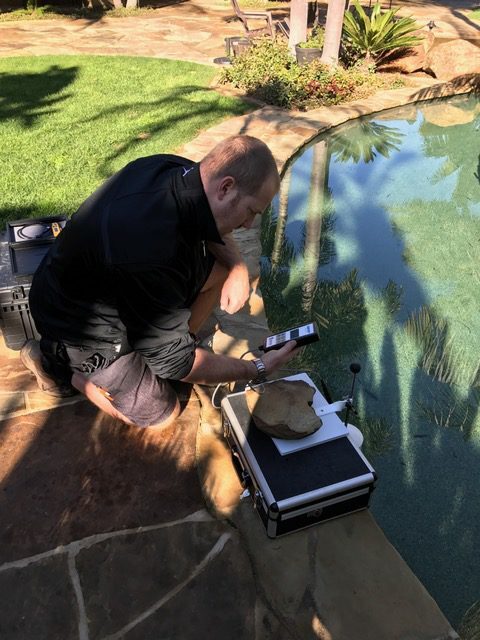
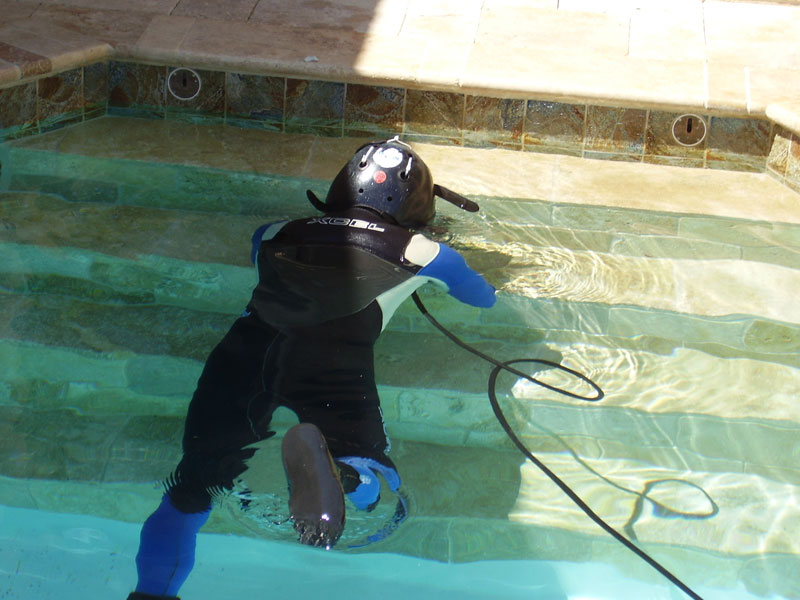
That is where pool water loss testing becomes a practical tool. A professional leak detection service uses methods like pressure testing the circulation system, dye testing around fittings and lights, or listening for water escaping through pipes. The goal is to locate the leak so it can be repaired before it drives up operating costs any further.
Where leaks commonly hide
Commercial pools have more points of potential failure than a typical backyard pool. The plumbing network includes multiple return lines, skimmers, main drains, and sometimes separate lines for water features or slides. A crack in a return line buried in concrete or under decking can lose a surprising amount of water without any visible wet spot on the surface.
Other common leak sites include:
- Skimmer throats and gaskets. A cracked skimmer or a worn gasket can let water escape into the ground around the pool shell.
- Light niches. Pool lights are installed in sealed housings that penetrate the pool wall. If the seal fails, water can leak out through the conduit.
- Main drain lines. A damaged pipe under the pool floor can cause continuous water loss that is hard to detect without inspection equipment.
- Expansion joints and structural cracks. In larger pools, movement in the concrete shell can create cracks that leak water slowly over time.
Each leak type requires a different approach to detection and repair. The cost of fixing a leak is almost always lower than the accumulated cost of letting it run for months.
For commercial pool operators in San Diego, Swim Care Pool Services provides specialized leak detection for residential and commercial swimming pools, spas, and related plumbing. Their work helps facility managers identify and address water loss before it drives operating expenses higher.
The role of regular inspection and testing
Routine pool water loss testing is not a one-time fix. A commercial pool should have its water level monitored regularly, and an inspection record kept so that trends can be spotted. A sudden increase in makeup water usage may indicate a new leak that needs prompt attention. Waiting until the water bill spikes is a reactive approach that costs money. Proactive testing gives the facility manager the information to act early.
Many properties use automatic water level controllers that add water when the level drops. These devices mask a leak because they keep the pool full without anyone noticing the loss. The water meter is the real indicator. If the meter shows a steady flow of makeup water even when the pool is not being used, that is a strong sign of a leak. Checking the meter reading daily or weekly and comparing it to expected evaporation can catch a problem before it becomes expensive.
Another useful practice is to conduct a simple dye test at least once a year. Turn off the pump, wait for the water to settle, and then squeeze a small amount of dye near suspect areas like skimmers, returns, and light fixtures. If the dye is pulled into a crack or gap, the leak is confirmed and its location is known.
Even if no leak is found, the testing process gives peace of mind. Knowing that the pool is tight means the water bill reflects only normal use and evaporation, not a hidden problem.
Balancing water chemistry and loss
Water quality itself can contribute to water loss. Unbalanced chemistry - especially high calcium hardness or total alkalinity - can cause scaling that plugs up the circulation system. That increases backwashing frequency for a sand filter or cleaning cycles for a cartridge filter. Each backwash cycle dumps hundreds of gallons of water to waste. Proper chemical maintenance reduces the need for frequent filter cleaning and keeps water loss from that source to a minimum.
Conversely, low calcium hardness can make water aggressive, leaching calcium from the pool plaster or grout and creating microscopic pathways for water to escape. Regular testing of water chemistry is part of the larger picture of water conservation.
When to call a professional
Some leaks are straightforward. A visible crack in the pool shell or a loose fitting at the equipment pad can be repaired by a qualified technician. But many leaks are hidden inside the plumbing or under the deck. Diagnosing them requires specialized tools and experience. That is where a professional leak detection service saves time and money. They can isolate sections of the plumbing, pressurize lines, and listen for the sound of escaping water. Without that equipment, a facility manager might dig in the wrong place or replace equipment that is not actually faulty.
For commercial pools in San Diego, Swim Care Pool Services offers leak detection that covers the full range of pool and spa plumbing. Their expertise helps property owners pinpoint the exact source of water loss, so repairs can be targeted and effective. That reduces downtime and keeps the pool available for guests and members.
The bottom line
Water loss in a commercial pool is not just an annoyance. It is a direct operating expense that affects water, chemicals, energy, and equipment life. Pool water loss testing is a practical way to separate normal evaporation from a real leak and to find that leak before it grows more expensive. Regular monitoring, a few simple tests, and professional help when needed keep costs under control and the pool running efficiently.